Embracing Smart Factories and Automation for Unprecedented Efficiency
Industrial Engineering is not far behind as the world propels into an era of digitization and connectivity. One of the hottest topics shaking up the realm of Industrial Engineering is Industry 4.0. It represents the fourth industrial revolution, entwining the physical and digital worlds. This article demystifies Industry 4.0 and provides insights into how engineering professionals can harness its potential for groundbreaking efficiency and innovation in industrial systems.
What is Industry 4.0?
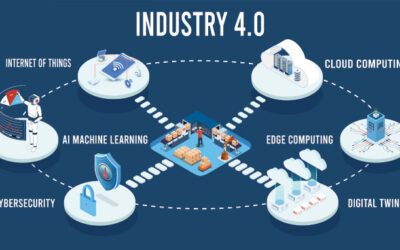
At its core, Industry 4.0 is about smart manufacturing. Picture a factory where machines communicate, systems are interconnected, information is exchanged in real-time, and manufacturing processes are optimized using data-driven insights. This is the essence of Industry 4.0. It encompasses many technologies, such as the Internet of Things (IoT), robotics, artificial intelligence (AI), and big data analytics.
The Pillars of Industry 4.0:
- Interconnectivity: The IoT is the backbone of Industry 4.0, enabling devices and systems to collect and exchange data.
- Information Transparency: Systems create a virtual copy of the physical world through sensor data, which is then transparently available.
- Technical Assistance: Systems can aid humans in decision-making and problem-solving and can handle unsafe or not feasible tasks.
- Decentralized Decision-making: Cyber-physical systems can make simple decisions on their own and operate with a degree of autonomy.
Applications in Industrial Engineering:
- Predictive Maintenance: Through continuous monitoring and data analysis, maintenance can be performed more effectively by predicting when it is needed.
- Supply Chain and Inventory Management: Real-time data sharing across the supply chain allows for greater flexibility and efficiency in inventory management.
- Production Quality Enhancement: Manufacturers can improve quality control using AI and machine learning, automatically detecting anomalies or defects.
- Customized Manufacturing: Industry 4.0 enables more efficient and flexible production processes, paving the way for the economical customization of products.
Navigating Challenges:
While Industry 4.0 offers tremendous opportunities, it also presents challenges. Data security is of utmost concern as systems become more interconnected. Reliability and stability are necessary to maintain the high uptime required in industrial applications. Additionally, the need for a skilled workforce that can effectively operate and maintain a highly digitized system is paramount.
Engineer the Future:
Industrial engineering professionals must be at the forefront of implementing and optimizing Industry 4.0. Here’s how to stay ahead:
- Embrace Lifelong Learning: Technologies are evolving rapidly. Engage in continuous learning and training in AI, IoT, robotics, and data analytics.
- Interdisciplinary Collaboration: Cross-functional collaboration with IT, data science, and manufacturing teams is crucial for successfully implementing Industry 4.0.
- Focus on Sustainability: Utilize Industry 4.0 technologies to create more sustainable and environmentally-friendly industrial processes.
- Human-Centric Design: While automation is a key component of Industry 4.0, focusing on the human aspect is essential. This includes user-friendly interfaces, ergonomic design, and consideration of societal impacts.
A Monumental Shift
Industry 4.0 represents a monumental shift in the way industrial processes are engineered. By embracing digitization, interconnectivity, and smart manufacturing, industrial engineering professionals can spearhead innovations that streamline productivity, bolster efficiency, and sculpt a sustainable future. The fourth industrial revolution is here; the time is ripe to engineer the change.
Cp vs. Cpk: Formulas, Examples and How to Interpret Process Capability
DFMEA vs. PFMEA: Differences, Examples and When to Use Each
Top Lead Generation Companies for Engineering Businesses (2026)
Engineering Design Essentials: From Power Systems to Prototyping
The Complexity of Modern Engineering Design Designing engineering systems is as much about avoiding mistakes as it is about innovation. Every decision — whether it’s choosing a material, configuring a control system, or running a thermal simulation — has consequences...
How to Build a Future-Proof Engineering Career: Skills, Salaries, Licensing, ROI, and Career Transitions
Why Career Strategy Matters for Engineers Engineering has always been a field where technical expertise meets real-world impact. Yet the modern engineering workforce faces challenges that extend beyond design equations and CAD models. Job security, career advancement,...